Download Why Buildings Stand Up: The Strength of Architecture
In order to give the wonderful resources as well as very easy method to supply the news and also info, it pertains to you by getting the factors to consider that offer thoughtful publication ideas. When the inspirations are coming gradually to require, you could rapidly obtain the Why Buildings Stand Up: The Strength Of Architecture as sources. Why? Due to the fact that, you can obtain them from the soft data of guide that s validated in the link offered.
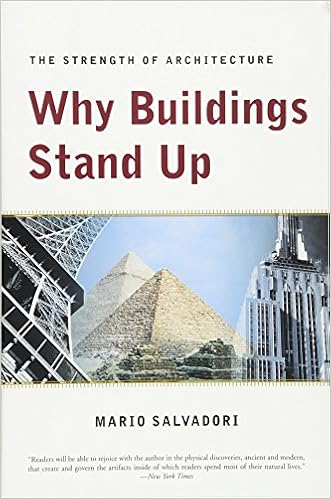
Why Buildings Stand Up: The Strength of Architecture

Download Why Buildings Stand Up: The Strength of Architecture
Why Buildings Stand Up: The Strength Of Architecture How can you alter your mind to be a lot more open? There several sources that could aid you to enhance your ideas. It can be from the other experiences and story from some people. Reserve Why Buildings Stand Up: The Strength Of Architecture is among the relied on resources to obtain. You can discover many books that we share here in this internet site. And also now, we reveal you one of the most effective, the Why Buildings Stand Up: The Strength Of Architecture
This is an extremely affordable book that ought to read. The complying with may use you the way to get this book. It is in fact reduce. When the other individuals need to walk as well as go outdoors to get guide in the book store, you can just be by visiting this site. There is given link that you can discover. It will assist you to see the book web page as well as get the Why Buildings Stand Up: The Strength Of Architecture Finished with the download and get this publication, start to read.
A brand-new encounter can be obtained by reviewing a book Why Buildings Stand Up: The Strength Of Architecture Also that is this Why Buildings Stand Up: The Strength Of Architecture or various other book collections. Our company offer this publication since you can find much more things to encourage your ability as well as understanding that will certainly make you a lot better in your life. It will certainly be additionally useful for the people around you. We suggest this soft data of the book here. To understand ways to obtain this book Why Buildings Stand Up: The Strength Of Architecture, find out more right here.
Actually, we can't require you to check out. But, by inspiring you to read this Why Buildings Stand Up: The Strength Of Architecture it could help you to realize something new in your life. It is not expensive, it's extremely inexpensive. Within that budget friendly price, you could get numerous things from this publication. So, are you sill uncertainty with this boom will offer you? Allow make change to make far better your life and all life worldwide.
"Readers will rejoice... in the physical discoveries, ancient and modern, that create and govern the artifacts inside of which readers spend most of their natural lives."―New York Times
Product details
Paperback: 320 pages
Publisher: W. W. Norton & Company; Reissue edition (February 17, 2002)
Language: English
ISBN-10: 0393306763
ISBN-13: 978-0393306767
Product Dimensions:
6.1 x 0.9 x 9.2 inches
Shipping Weight: 1.2 pounds (View shipping rates and policies)
Average Customer Review:
4.5 out of 5 stars
46 customer reviews
Amazon Best Sellers Rank:
#32,719 in Books (See Top 100 in Books)
Salvadori's "Why Buildings Stand Up" is perhaps best introduced by the author's own words in the preface, succinctly and appealingly written: "This book was written for those who love beautiful buildings and wonder how they stand up." A somewhat lofty goal, the author nevertheless does a wonderful job of introducing the basics of building mechanics and then to describe how those mechanics - both static and dynamic - are at play in a wide variety of structures ancient and modern. The book is a thoroughly enjoyable read that leaves one much more greatly informed than one might expect, despite the obvious implication and stated goal of the title.The book truly represents a door opening into the world of structural issues in architecture. After a brief introduction on the historical background of the field of architecture, Salvadori introduces the pyramids of Egypt as one of the earliest examples of empirical approaches to structural erection ("empirical" meaning that much of this effort was trial-and-error, in spite of some basic understandings of how gravity affects, and creates, structural "loads" in any construction). Having allowed us to focus our thoughts on these early construction programs, we then are introduced in turn to essential engineering architecture concepts such as loads, beams, columns, and building materials. These discussions, which are covered in extensive, but nevertheless clear, text, serve as the foundation pieces for everything else examined throughout the remainder of the work.The text next moves into numerous specific building types, and examines the specific engineering issues surrounding each. By presenting the material in this manner, we are able to learn all about the sometimes complex statics and dynamics issues in a contextual manner, i.e., we see the actual real-life application of these concepts in the instances the author chooses as venues to teach these concepts. We look at houses from all ages, every major type of bridge, at domes, tents, balloon structures, and even "hanging dishes." We are also provided neatly crafted line drawings illustrating these concepts, and often reproducing specific sites that represent salient examples of the concepts under discussion.Beyond discussing structural concepts, we are also treated to specific examinations, by chapter, of some of the most fascinating building projects around the world, and are made to consider the unique and often complex structural issues at work in these buildings. These include the Eiffel Tower, the Hagia Sophia, the Brooklyn Bridge, and even a whole chapter on the fascinating elements in play in the classic medieval European gothic cathedral. In the case of gothic cathedrals, Salvadori selects one of the most interesting of cases, the Saint Pierre cathedral of Beauvais, as a dual example of how gothic structural forces are controlled through the pointed arch, the ribbed vault, and the flying buttress, but also how that, in some cases, such as at Beauvais, collapse still ensued under certain conditions. The Beauvais case is particularly interesting, as the lofty goal of the edifice - to be the tallest gothic cathedral ever built - may not have been the actual cause of collapse, and the steps taken to prevent further collapse (such as the adding of additional interior piers in the 14th century) are not necessarily the only reason why collapse has not since occurred in the structure since the 16th century.Salvadori's text is a companion to his other volume, "Why Buildings Fall Down," and although this might sound like a marketing ploy, upon reading the two texts one can see the very different approach and outcomes produced by these two approaches. You can certainly read either volume by itself and walk away satisfied, but if you read BOTH volumes, the opportunity is presented to the reader to more carefully integrate the learning into a more meaningful whole. One might view one approach as a top-down approach, and the other a bottom-up approach, although that metaphor slightly fails in some respects. But there is nevertheless a great value in seeing how stressors, tension, lateral forces, and so on balance in harmony in structurally-sound buildings and structures, and how unbalanced loads can force collapse in all types of structures.As an adjunct reading to the mechanical engineer, I can heartily recommend both these texts to help contextualize and illuminate the concepts learned in engineering classes. For the general reader, I can equally recommend these books as fascinating and educational forays into the world of structures, both standing and not.
This book was very helpful to me when I was studying for the architecture registration exams some years ago. Along with its companion book "Why Buildings Fall Down" it covered a significant swath of the multiple choice material that I encountered on the exams, with an appropriate level of specificity, or lack thereof.I've also recommended this book often to architecture students, because it is full of real-world examples of the principles that are studied in statics courses, and it is more engaging reading than the formula-filled textbooks that are required reading in a lot of those courses.That said, this book may not appeal to or be useful for some. I suspect it would annoy some engineers I know, with its fairly basic principles and lack of fine detail, and because it contains some over-simplifications that would matter if one were trying to use it as an instruction book to build another Pantheon.I do think this book would be appropriate for some non-architects, as the buildings discussed are mostly widely recognizable icons, and the stories behind them are lively and engaging. But it is also possible the book could be a little intimidating for someone who doesn't yet have an architectural vocabulary. Perhaps if I was giving this book to someone like a high school student interested in architecture, or someone without much past reading on the subject, then I might also give them something like Ching's "A Visual Dictionary of Architecture" at the same time, so that the reader could look up any unfamiliar terms.
This is a fascinating book. I read it years ago and had to track it down once again. Salvadori's writing style is unique for me in that it helps bring to life so many things around us that we take for granted or don't bother to ponder. For instance, why do some architectural designs look beautiful or "correct" while some may seem out of place or wrong. I especially enjoyed reading about the once despised, now universally loved Eiffel Tower. You won't be disappointed with this book.
As a structures primer, there is no better read. Why Buildings Stand Up covers the breadth of historical presidents intermingled with well presented, clearly written structural techniques. Certainly not an exhaustive textbook, it does however generate momentum for further study and will definitely lay a solid foundation of structural understanding. An absolute essential for young architects and a great read for anyone interested in some construction fundamentals. If you're more interested in the "what went wrong" kind of structural failure documentary as opposed to this more technical piece, see Why Buildings Fall Down also by Salvadori.
awesome
This book was a textbook for one of my classes in architecture school in the 80s. My old, dog-eared copy is still on my bookshelf. I bought this copy for an 11-year-old friend who is super smart, and who wants to be an architect and build skyscrapers someday. I don't know if most 11-year-olds could comprehend the concepts, but my friend's mom assures me that he will have no problem understanding the book.
This is actually a very informative and interesting book, especially for those interested in architecture, structural engineering, and construction management.
Bought this for a structures class I was taking, helped a lot to understand basics !
Recommended as additional reading for the ARE exam by Thaddeus. This is a great book, I wish I had read it while still in architecture school. This would be a great read between your first and second year of structures or just for the exam. "Why Buildings Fall Down" is also great, they will not only help you understand structures, but it's really helpful for architecture history. Definitely worth having in your library.
Why Buildings Stand Up: The Strength of Architecture PDF
Why Buildings Stand Up: The Strength of Architecture EPub
Why Buildings Stand Up: The Strength of Architecture Doc
Why Buildings Stand Up: The Strength of Architecture iBooks
Why Buildings Stand Up: The Strength of Architecture rtf
Why Buildings Stand Up: The Strength of Architecture Mobipocket
Why Buildings Stand Up: The Strength of Architecture Kindle